
For many Catholic families, First Communion is one of the most meaningful milestones in a child’s spiritual journey. It is more than just a formal occasion or family celebration—it represents a deepening connection with faith, community, and tradition. In this article, we’ll explore what First Communion is, why it holds such significance, and how families can prepare for and honour this momentous event.
What is First Communion?
If you’ve ever asked yourself what is first communion, it refers to the first time a baptised Catholic child (or sometimes an adult) receives the Eucharist—the Body and Blood of Christ—during Mass. It is considered one of the most sacred sacraments within the Catholic Church, following Baptism and usually preceding Confirmation. Traditionally, children prepare for this milestone between the ages of seven and nine, a stage often referred to as the “age of reason,” when they are thought to be mature enough to understand the importance of receiving Christ in the Eucharist.
The Spiritual Significance
At its heart, First Communion is not just about ritual; it’s about entering more fully into the life of the Church. Receiving the Eucharist is a profound expression of faith, symbolising unity with Jesus Christ and with the broader Catholic community. For the child, it marks the beginning of a lifelong relationship with the sacrament of the Eucharist, which Catholics believe provides spiritual nourishment and strength. For parents, grandparents, and godparents, it is an opportunity to witness a young person’s growing commitment to their beliefs and values.
Preparation for First Communion
- Religious Education and Catechism: Preparation typically involves a period of catechism classes, where children learn about the meaning of the Eucharist, the structure of the Mass, and the importance of confession and reconciliation. These lessons are designed to help children not only understand the sacrament but also to develop a deeper appreciation of their faith.
- The Sacrament of Reconciliation: Before receiving First Communion, children usually make their First Reconciliation (or First Confession). This sacrament encourages them to reflect on their actions, seek forgiveness, and approach Communion with a clear heart and mind.
- Family Involvement: The family plays an essential role in preparation. Parents are encouraged to talk openly about their own faith, attend Mass together, and create an environment where children feel comfortable asking questions. This shared journey strengthens family bonds while reinforcing the spiritual significance of the occasion.
The Ceremony Itself
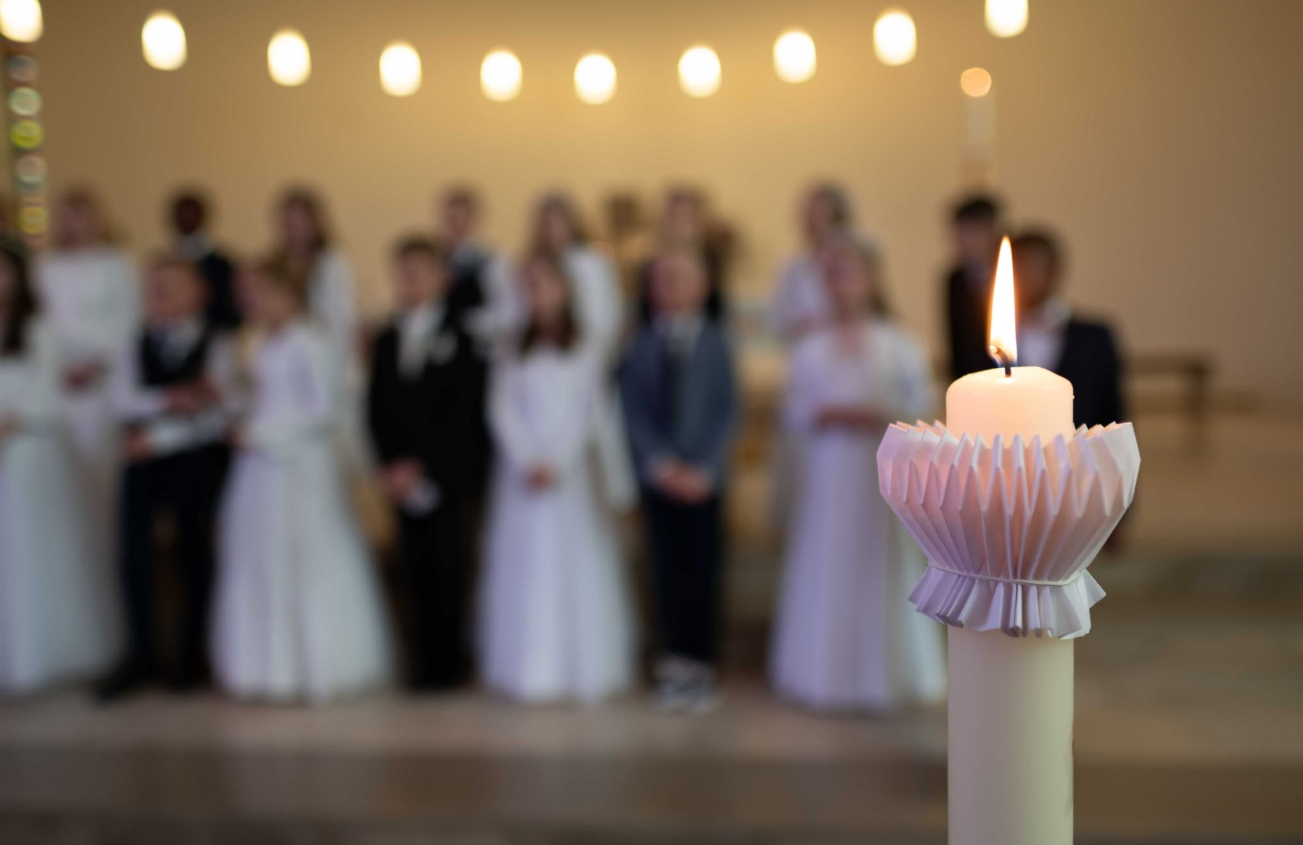
The First Communion Mass is often held during a Sunday service or on a specially chosen day. Children are dressed in traditional attire—white dresses or suits—which symbolise purity and new beginnings.
During the Mass:
- Children process into the church, often together as a group.
- They participate in readings, prayers, or songs, depending on the parish.
- They receive the Eucharist for the first time, often under the guidance of the priest.
The moment is usually accompanied by a mix of solemnity and joy, with families gathering to celebrate afterwards.
Traditions and Symbolism
- Clothing: White clothing, particularly dresses and veils for girls, reflects purity and innocence. Boys may wear a white shirt, suit, or tie. While traditions vary, the attire is always chosen to highlight the sacred nature of the event.
- Gifts: It’s common for children to receive religious gifts, such as a rosary, prayer book, or crucifix, to commemorate the day. These items serve as lasting reminders of their spiritual milestone.
- Celebrations: After the Mass, families often host a gathering with food, photos, and fellowship. It’s a chance to bring together loved ones to honour the child’s achievement and share in the joy of the day.
How Families Can Honour the Day
While First Communion is rooted in tradition, families often look for ways to make the experience personally meaningful. Here are a few ideas:
- Create a memory book: Document the preparation, ceremony, and celebrations with photos, notes, and keepsakes.
- Involve godparents: Invite godparents to play an active role, whether through attending preparation classes, sharing prayers, or offering a special gift.
- Emphasise the spiritual over the material: While parties and outfits are enjoyable, keeping the focus on the faith journey helps maintain the event’s deeper meaning.
The Role of the Parish Community
First Communion is not just about the child and their family—it’s also a celebration for the parish community. Parishioners often support children during their preparation, pray for them, and welcome them into deeper participation in the Mass. This communal aspect highlights the idea that faith is not an isolated practice but something lived and shared; it reinforces that each child is an important part of the wider Church family.
Continuing the Journey of Faith
While First Communion is a major milestone, it’s just the beginning of a lifelong journey. After receiving the Eucharist for the first time, children are encouraged to continue attending Mass regularly, participating in parish life, and deepening their relationship with God.
Later in their teenage years, they may take the next step through Confirmation, affirming their commitment to the Catholic faith with a more mature understanding.
Parents and families can nurture this ongoing journey by:
- Attending Mass together consistently.
- Encouraging children to pray at home.
- Staying involved in parish activities or youth groups.
Why It Matters Today
In an increasingly fast-paced and secular world, First Communion provides a moment to pause, reflect, and reconnect with values that transcend everyday life. It teaches children about commitment, community, and the presence of faith in their lives—lessons that can guide them well beyond childhood. For many families, it also strengthens cultural and generational connections, linking children to the traditions of parents, grandparents, and ancestors who celebrated the same rite of passage.
First Communion is a beautiful blend of tradition, spirituality, and family celebration
It is both a personal milestone for the child and a communal event for the Church, symbolising unity, renewal, and the continuing journey of faith. By understanding what First Communion is and why it holds such significance, families can approach the occasion with reverence and joy, ensuring it remains a cherished memory for years to come.