
When you hear Hugo Bachega reporting for the BBC, it’s hard not to notice his voice. It carries authority, calmness, and a touch of something different, something that doesn’t fit neatly into any single English dialect. This unique sound can be commonly known as the Hugo Bachega Accent, even though it is not a formally recognised accent. Rather, it is an individualistic language mixture, which shows his background, education, and experience working abroad.
Let’s unpack what the Hugo Bachega Accent really is, how and why it works so well in a global broadcasting environment.
What Is the Hugo Bachega Accent?
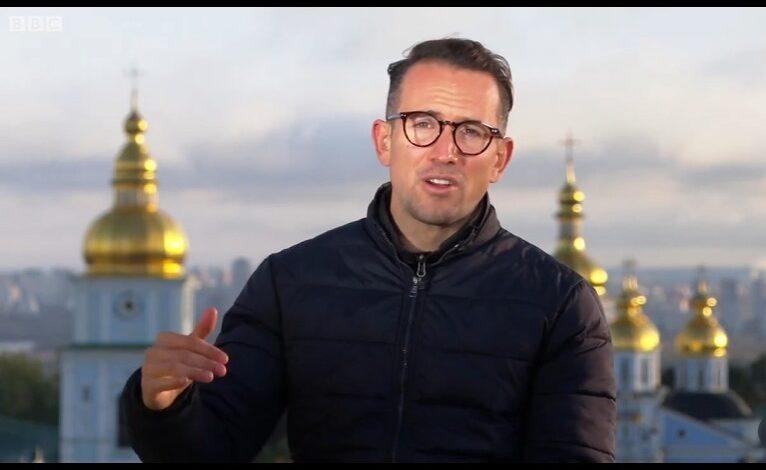
A Hugo Bachega Accent does not exist in the linguistic world as the official or the most accepted accent. The phrase merely refers to the personal speech style of Hugo Bachega, one of the BBC World Correspondents, a Brazilian.
His accent can be said to be a mixture of an international English accent, which is a mixture of both his native Brazilian Portuguese accent and the British English that he works with in his daily professional life. It is not broken English, it is not foreign-accented English, but an elegant, articulate and conscious manner of speaking that speaks not only of his origin but also of his worldly experience.
How the Accent Came into Existence
The Hugo Bachega Accent did not come out of the sky. It developed automatically as he passed through various linguistic and cultural settings.
1. Native Language Foundation:
Hugo was born in Brazil, where he was influenced by Brazilian Portuguese in his early sounds, rhythm and speech patterns. Portuguese is syllable-timed (the duration of a syllable is about equal), unlike English, which is stress-timed (syllables stressed are longer). Such a difference in rhythm implicitly affects his intonation in English.
2. Learning English as a Second Language:
It is probable that, similar to most of the international professionals, he learned British English as a paradigm, as that is the standard at the BBC. Nevertheless, all the noise that he learnt went through his Portuguese filter, which made the vowels, rhythm and even the manner he stresses out words.
3. Professional Immersion:
The years of his English-speaking experience perfected his accent and intonation. Broadcasting requires clarity, and he made some conscious efforts to soften or modify some Portuguese influences without annihilating them completely. What is produced is a smooth mixture accent, an accent that is both understandable, accurate and natural.
Breaking It Down: The Key Features
The Hugo Bachega Accent has minor features that it shares with standard British English:
1. Intonation and Rhythm:
- You will find a more flowing, more musical rhythm. This is Portuguese in origin, where there is more evenness in the rises and falls of the syllables.
2. Vowel Pronunciation:
- English vowels like /ɪ/ (in bit) and /iː/ (in beet) can sound slightly different; they may even shift toward the open and pure Portuguese vowel sounds.
3. Consonant Treatment:
- The ‘r’ sound might occasionally carry a light trill or tap, typical of Brazilian Portuguese. Similarly, the ‘t’ sound might be softer in certain contexts.
4. Clarity and Articulation:
- His articulation is clean despite these undertones. All the vowels are well enunciated, which is a typical feature of professional broadcasting.
Why It Works So Well
Balance is what is so attractive about the Hugo Bachega Accent. It is professional, at the same time it is personal, formal but friendly. Clearness is essential in journalism, particularly international reporting, as well as relatability. His accent achieves both.
His voice is distinctive and can be comprehended by listeners who are not native speakers of his language. It implies that he is a global orator, a person who has experienced and travelled in more than one culture.
How to Develop a Similar Blended Accent
It is not directly trying to imitate the Hugo Bachega Accent. Rather, the point is to be able to learn through what process it was created. Here is the way you can form a blended accent that suits you and your aspirations:
1. Pick Your Target Accent: Select the type of English that you like: British (RP), American or the other. This provides your learning with a point of reference.
2. Listen Intentionally: Immerse yourself in the native media, podcasts, news coverage, and interviews. Rhythm of notice, intonation and stress of words.
3. Analyse Your Native Influence: Determine what sounds influenced by your language are used in the English language. Indicatively, would you say ship, as sheep? Do you accentuate every syllable? Awareness is half the battle.
4. Practice Through Shadowing: Select a clip of your preferred accent (it may be as basic as Hugo Bachega BBC news). Listen to a sentence and repeat what you have heard, the exact wording, including the tone, tempo, and pitch.
5. Record and Compare: Recording yourself is a game-changer. Compare the original and your version and identify differences.
6. Stay Consistent: Accent shaping takes time. The mouth muscles will adjust themselves, and this will be achieved through exposure and repetition on a daily basis.
Why It Makes a Difference
The fact that the Hugo Bachega Accent has a mixed or blended accent can be considered an advantage in the modern world:
1. It Builds Connection: Persons of alternative cultures tend to connect more with a voice not belonging to a specific area.
2. It Reflects Global Identity: In the global context, it is indicative of experience, flexibility, and cross-cultural intelligence.
3. It Increases Professional Presence: Intelligible, deliberate speech with or without an accent conveys authority and composure, which is what every communicator should have.
4. It Adds Personality: Your foreign accent tempers and customises your English. You do not sound like anybody; you sound like yourself.
Final Thoughts
The Hugo Bachega Accent is not something that can be learned at school. It is a logical result of being between languages, cultures, and continents. It demonstrates that an accent doesn’t have to be erased to be respected.
Actually, it is in its mixture that the beauty of his speech resides, the common rhythm of Portuguese diluted by the purity of British English. It is evidence that global communication does not require homogeneity; it lives on diversity.
If you’re on your own language journey, take a page from Hugo Bachega’s playbook: speak clearly, stay authentic, and let your voice tell your story.