
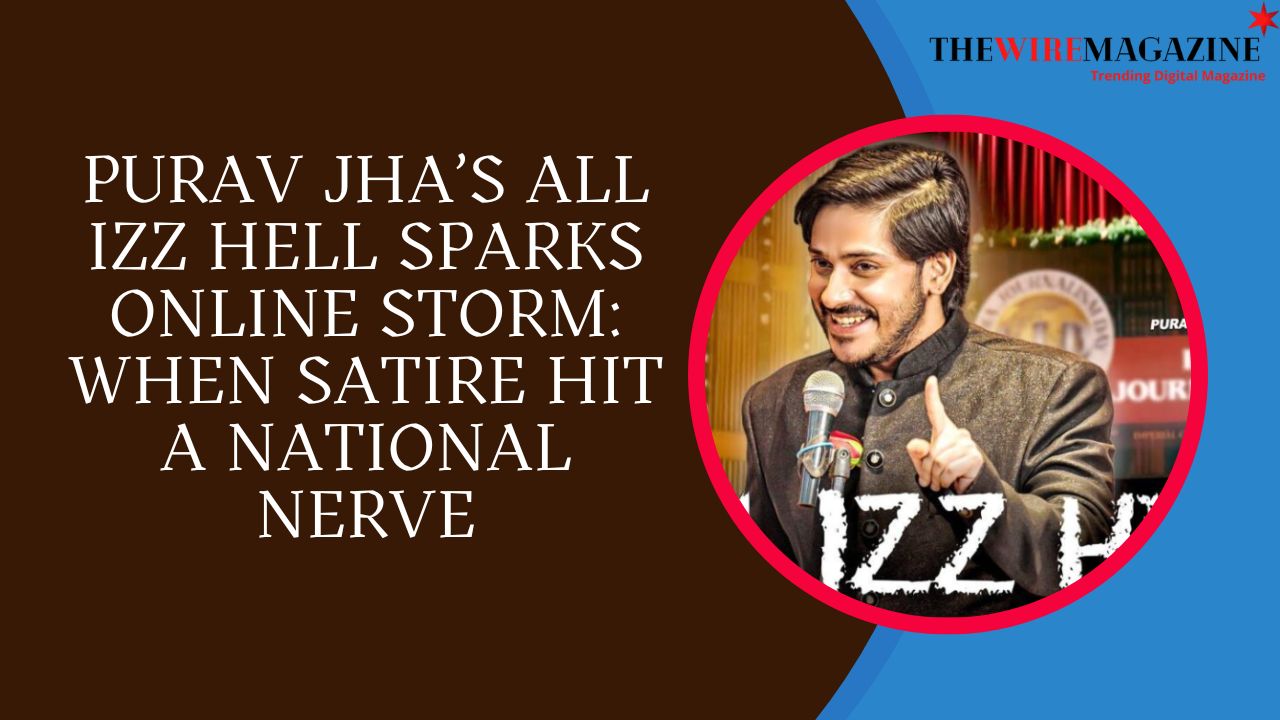
On January 23, 2026, Purav Jha released a video that did far more than entertain. All Izz Hell went viral across Indian social media within hours. What started as a musical satire sketch quickly turned into an argumentative cultural outcry. The video has turned nostalgia upside down. It turned the optimistic song “All Izz Well” of 3 Idiots into a gloomy thing. The outcome was uneasiness, controversy and division. This reaction explains why Purav Jha’s All Izz Hell Sparks Online Storm is not just a headline. It is a moment.
What All Izz Hell Is All about
At its core, the video is a satirical “temperature check” of India in 2026. It claims that forced optimism has turned into a coping strategy. Purav suggests that it is no longer helpful to repeat everything well. The problems are visible. Ignoring them makes the situation worse.
The sketch blends music, parody and rapid collaging. The tone is deliberately crude. The lyrics discuss delicate degrees, unending rivalry, health expenses, pollution and damaged roads.
These are not abstract complaints. They are a reflection of the day-to-day life of millions. This shift matters. Purav developed his reputation as the Human AI, who emulates and performs light comedy. Here, he steps into darker satire.
A Closer Look at the Key Segments
The video is displayed in a series of sketches, which are connected by the main song.
The Song: Comfort to Collapse.
The title song is monotonous yet depressing. It renders heavy lines with the use of upbeat rhythms. The opposition seems intentional. The audience is tapping its feet as it wails over the words. The message is simple. A smile does not make broken systems better.
“Koffee with Jalan”
A parody of elite talk shows is one of the most discussed ones. It is called Koffee with Jalan, which mocks celebrity conversations that feel detached from public reality. Luxury issues are discussed, and mundane people are struggling outside the screen. The joke works since it is something relatable. Many viewers called it uncomfortably accurate.
Celebrity and Media Parodies.
Perhaps the hardest section to watch is the montage of everyday struggles in India. Those segments imply that star power has the tendency to overshadow real problems. The media becomes a spectacle. Outrage gets softened. Grave issues are diminished to the background.
The Systemic Montage
Probably the most difficult part to watch is the scene of a montage of failures in everyday life. Rapid cuts feature potholes, pollution, queues and corruption. There is no punchline here. The point is the silence between jokes.
Behind the Camera: A Team Effort
The project was not casual, though of a rather rough tone. It was brought to life by PJ Productions with a large creative team.
Purav Jha and Shivam Bajpai have co-written the video. Bajpai was aiding in the softening of the social commentary. Direction and editing were done by Anmol Prasher, which is very quick-paced; this is a reflection of the mayhem being described.
The music, composed by Tushar Garg and sung by Vivek Mishra, uses a deceptively light sound. Cinematographer Nitin Goyal contrasts glossy celebrity spaces with gritty public settings.
Why the Internet Exploded
The response was immediate and discriminating. The supporters commended the level of honesty in the video. It was said by many to be a voice of middle-class fatigue. It was characterised as a mirror as opposed to a lecture. To such audiences, Purav Jha’s All Izz Hell resonates since it makes the claims that news debates often avoid.
Critics were equally loud. Some thought the video was negative enough. It was accused by others of drawing India in broad strokes. One of the general criticisms was the absence of solutions. It was pessimism in disguise to them.
Then followed the political framing. Some of the online communities termed the video as anti-national. The objection was in hot pursuit. Those who argued in favour of it asserted that it is nothing but common sense to question governance and corruption. Youtubers like Dhruv Rathee stood up in defence of the right to criticise.
The Gen Z “GOAT” Debate
Timing added fuel to the fire. The release was accompanied by content from CarryMinati, which brought back the argument of Gen Z creators. The fans claimed that Purav has evolved to become a social commentator in his writing. They believed more antique roast formats were stagnating.
This comparison made the video cross the satire line. It became a measuring stick for where digital comedy might be heading next.
Cultural Impact Beyond Views
Within days, the video had passed millions of views on different platforms. The larger effect was presented in other places. Instagram Reels were loaded with people telling their personal problems. Exam stress. Hospital bills. Daily commutes. The song was made into an autobiographical soundtrack.
According to analysts, the video is a cultural snapshot. It was the silent weariness and not an angry outburst. That may explain its reach. People felt seen.
Purav reacted to the backlash in a very cool manner. He explained that the video is not aimed at individuals but at the systems. He presented it as social satire rather than a political attack. He further added that he would continue to speak out of experience.
Conclusion
All Izz Hell will not be remembered only due to its jokes, its timing. me in a time of teddy-long patience, of optimism that is acting out. The video fails to provide solutions. That criticism is fair. But satire has never been about directly mending things. It is there to poke, provoke, and disturb.
This is why Purav Jha’s All Izz Hell remains topical even weeks after its release. It challenged comfort. It questioned silence. It forced viewers to decide whether laughter should soothe or sting. Like it or not, the video was the turning point. The Indian online satire became more pointed that day. And the internet made sure nobody stayed neutral.